
Charging Cable Keeps Fraying at the End? Why It Happens and How to Stop It
Heads up: this post contains affiliate links. If you buy through them, Rough Wrap may earn a commission at no extra cost to you.
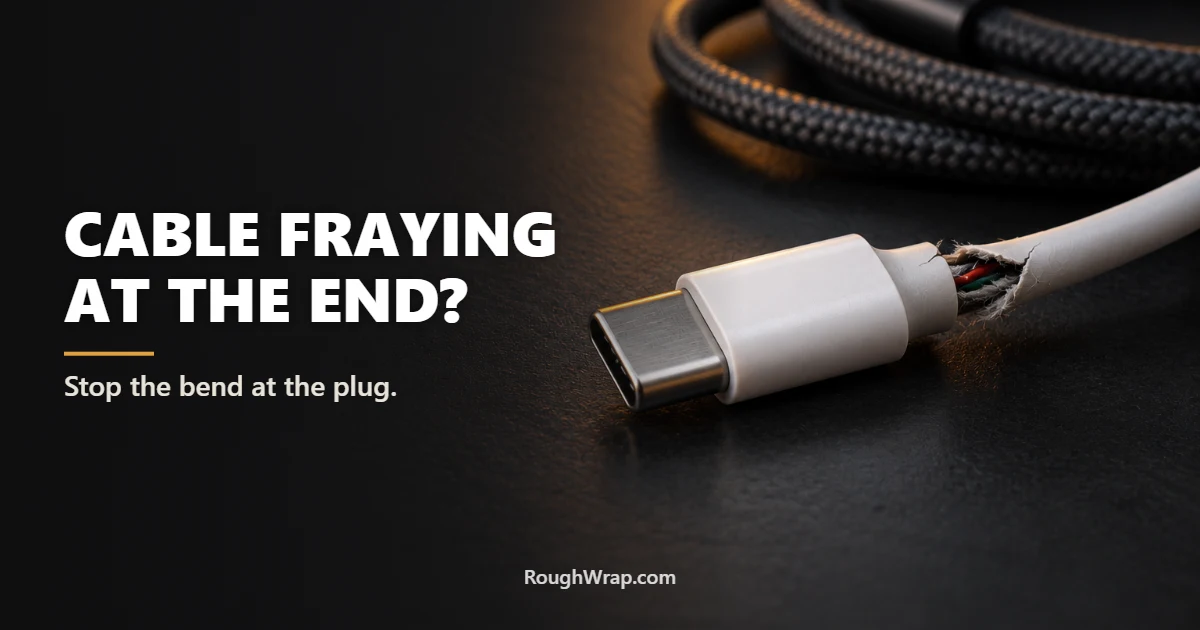
It always goes the same way. The cable works fine for a few months, then the rubber starts to split right where it meets the plug. A little tape. A little more tape. Then one day it only charges if you hold it at a weird angle.
That spot right at the connector is where almost every cable dies, and it’s not a coincidence. Here’s why it happens, when you need to stop using a frayed cable, and how to make the next one last.
Why cables fray right at the end
The plug is rigid. The cable is flexible. Every time you bend the cable, all that stress lands on the one spot where flexible meets rigid. Bend it there a few thousand times (charging in bed, phone propped on your chest, cable yanked out of the wall) and the outer jacket cracks, then the wires inside start to break.
Three habits make it a lot worse: pulling the cable out by the cord instead of the plug, using your phone while it charges with the cable bent at a sharp angle, and wrapping the cable tightly around a charging brick for travel. If you do all three, you’re basically speedrunning a new cable.
Stop using it if you can see wires
A little cosmetic wear on the jacket is one thing. But if the outer layer is split and you can see the inner wires or metal braid, stop using that cable. Exposed or damaged wires can overheat, spark, or damage your phone’s charging port. Tape isn’t a real fix. Cables are cheap. A melted charging port, or worse, isn’t.
1. Pull the plug, not the cord
Free, and it matters more than anything else on this list. Grip the hard plug when you unplug from your phone or the wall. Yanking by the cord puts all the force right on the weak spot.
2. Add a cable protector
A cable protector (also called a cable saver) is a little spring or rubber sleeve that slides over the end of the cable, right where it meets the plug. It spreads out the bend so the cable can’t kink sharply at that one point. They cost a few dollars for a big pack, and they work on cables you already own.
3. Switch to braided cables
Braided cables have a woven nylon jacket instead of plain rubber, and most have beefed-up strain relief at the connector. They hold up much better to daily bending. Anker and similar well-known brands make braided USB-C and Lightning cables that routinely outlast the plain cable that came in the box. Get a 6-foot or 10-foot length for the bed or the couch, so you’re not stretching it tight.
4. Try a 90-degree cable
If you use your phone while it charges (gaming, scrolling in bed, navigation in the car), a right-angle cable is a game changer. The connector is bent at 90 degrees, so the cable runs flat along the phone instead of bending sharply at the plug. Less bend, less fraying. Gamers swear by them.
5. Buy certified cables
For iPhones with Lightning, look for Apple’s “MFi” (Made for iPhone) certification on the box. For USB-C, stick with reputable brands and look for USB-IF certification when you can find it. Bargain-bin cables often skip the reinforced strain relief at the connector, which is exactly where they fail. They also may not charge safely or at full speed.
Store it right
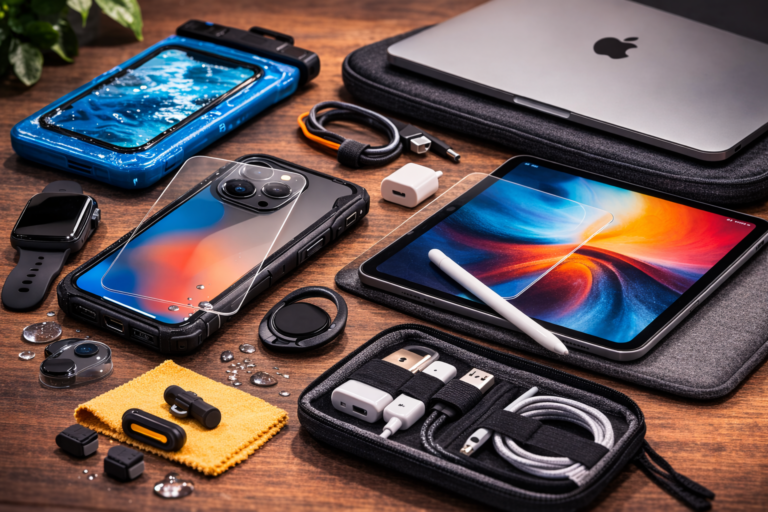
When you travel, loosely loop the cable into a coil (like you’d coil a garden hose) instead of wrapping it tightly around the charger. A little Velcro tie keeps it neat. And if you’re stuffing gadgets in a bag, a small tech organizer pouch keeps cables from getting crushed. Our roundup of device protection accessories has a few good ones.
And if your phone charges slowly even with a good cable, the problem might be the port. Here’s how to clean lint out of a charging port safely.
FAQ
Why do charging cables fray at the end?
The spot where the flexible cable meets the rigid plug takes all the stress every time the cable bends. Over thousands of bends, the jacket cracks and the wires inside break. Pulling by the cord and charging at sharp angles speed it up.
Is it safe to use a frayed charging cable?
Not if the outer jacket is split and you can see wires or braid. Damaged wires can overheat or spark, and they can damage your phone’s charging port. Replace it.
Can I fix a frayed cable with electrical tape?
Tape can hold together light cosmetic wear, but it doesn’t repair broken wires inside, and it’s not safe if wires are exposed. A new cable is a better fix.
Do braided cables last longer?
Generally, yes. Braided nylon jackets resist bending and abrasion better than plain rubber, and good braided cables usually have stronger strain relief at the connector.
What is a cable protector?
A small spring or rubber sleeve that slides over the cable where it meets the plug. It spreads out bending stress so the cable doesn’t kink sharply at that point.
What does MFi certified mean?
MFi stands for Made for iPhone. It’s Apple’s certification program for accessories like Lightning cables, meaning the cable meets Apple’s standards for compatibility and charging.
Disclosure: Rough Wrap may earn a commission if you buy through links on this page, at no extra cost to you. See our affiliate disclosure.

One Comment